
Founders
What Founders Should Know Before Building a Digital Brand
2025-12-08 · 6 min read
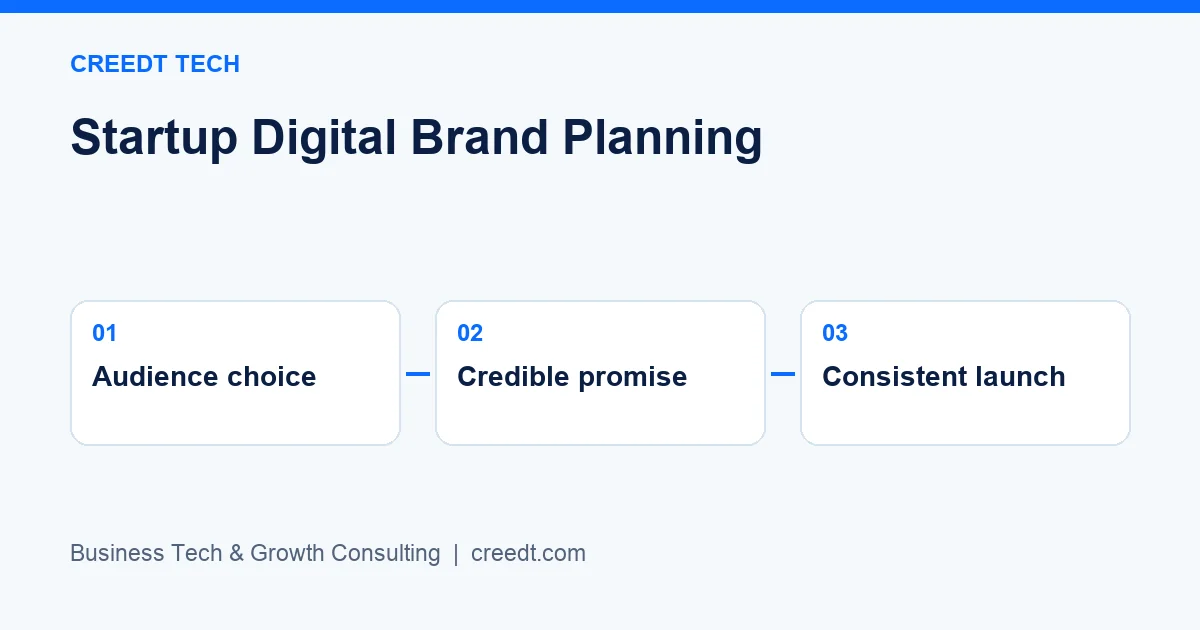
The framework at a glance
Table of contents
Personal brand vs company brand
Both matter. Early stage skews personal, growth stage balances both.
Choosing where to show up
Pick platforms where your buyers and future hires actually spend time.
Content as a hiring magnet
Great founder content compounds into recruiting, sales, and partnerships.
Common founder mistakes
Chasing followers over customers, and outsourcing voice too early.
FAQ
Frequently asked questions
Should founders post on LinkedIn?
For most B2B and services founders in India, yes — consistently.
How much time should founders invest?
2–4 hours per week with the right support system.
Choose the audience before designing the identity
A founder's brand starts with a decision about who the offer serves and what problem it addresses. Broad ambitions can remain part of the business plan, but the first message needs enough specificity for a buyer to recognize relevance.
Collect the language customers use to describe the problem. Avoid using internal product terminology as the only explanation. An unfamiliar name or category can work when the supporting copy makes the promise and next step clear.
Make only claims you can support
Early-stage businesses often lack a large portfolio. They can still explain the process, show a permitted demonstration and describe the scope honestly. Do not fill the gap with invented customers, reviews or performance statistics.
Distinguish a product concept, prototype and live service. Buyers need to understand what is available now and what is still being developed. Clear expectations create a stronger foundation than a launch message that overstates readiness.
Launch with a maintainable set of assets
Prioritize the website, one or two relevant profiles and the sales materials needed for actual conversations. Establish simple guidelines for naming, colors, typography and tone. Keep the contact path and business information consistent.
As the offer changes through learning, update the message deliberately. A decision log helps the team distinguish a strategic change from an improvised campaign slogan. Preserve useful URLs and avoid unnecessary redesigns each time the positioning becomes clearer.
A practical review framework
| Area | Action | Evidence to review |
|---|---|---|
| Audience | Who has the problem? | A specific buyer description |
| Promise | What can be delivered now? | Supported scope and evidence |
| Identity | How is it recognized? | Consistent assets and language |
Use this framework as a discussion aid. Start with one row, record the current situation and assign an owner to the next action. The aim is to resolve a useful business decision, rather than complete a checklist without changing how work happens.
Common mistakes to avoid
- Designing before deciding who the offer serves
- Using fabricated trust signals
- Creating more profiles than the team can maintain
Turn the guide into a bounded action plan
Write a short brief covering the problem, the people affected, the records or pages involved and the decision you want to make. Define what is available as evidence and what still needs to be checked. Do not include passwords, private customer information or sensitive internal files in an initial enquiry.
Agree the smallest useful next step, a responsible owner and a review point. If the action changes a live process, include normal and exception paths in testing. Record the result with its limitations; an illustrative example or a short pilot is not proof of a guaranteed commercial outcome.
Editorial information
Published by Creedt Tech. This guide provides general business and implementation information. Examples are illustrative unless identified with substantiated evidence. It does not replace legal, financial, clinical or other regulated professional advice.
Want this working inside your business?
Book a free growth consultation with the Creedt Tech team and turn these ideas into a plan.
Connect with Creedt Tech